Creating a temporary ice rink for a city or community can generate excitement, attract visitors and support local economic activity. But behind every smooth skating experience is careful technical planning. From system sizing to site logistics, early decisions have a major impact on ice quality, energy performance and event reliability.
For event managers, the key is to think beyond the rink itself. A successful project depends on choosing the right partner, understanding site conditions and planning for consistent operation throughout the event.
1. Start with the right cooling strategy
No two temporary ice rink projects are exactly alike. Rink size, local climate, operating hours, expected footfall and the intended use of the ice all influence the cooling requirement. A rink designed for recreational skating may have different demands than one expected to support performances, hockey demonstrations or high visitor turnover.
Working with an experienced HVAC and process cooling partner helps ensure the chiller system is correctly matched to the project. Proper sizing is essential not only for maintaining ice quality, but also for managing energy use and avoiding unnecessary operational risk.
2. Assess the site in detail
Site conditions can make or break a temporary rink project. Surface levelness, drainage, power availability, delivery access and surrounding buildings all affect installation and operation. Outdoor rinks also need to account for sun exposure, wind and fluctuating ambient temperatures.
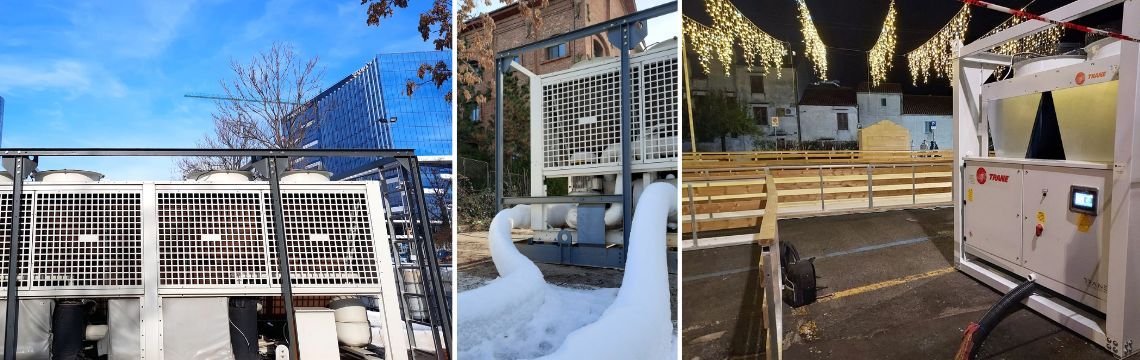
A detailed site assessment at the beginning of the project helps identify constraints early and reduces the risk of delays or performance issues later. It also supports safer installation planning and smoother coordination with contractors, utilities and city stakeholders. In the case of insufficient power supply, Trane Rental Services can provide additional autonomous power supply.
3. Plan for operations, not just installation
A temporary rink is a live event environment, not a one-time equipment setup. Ice quality must be maintained day after day, often in changing weather conditions and under heavy public use. That means event planners should consider monitoring, maintenance support and contingency planning from the outset.
Key questions include how the system will be supervised, what response plan is in place if conditions change, and how the rink will be maintained during busy periods. It’s also important to plan how to melt the ice when the event is over. Reliable service support can be just as important as the equipment itself. Trane Rental Services can provide a heat pump to melt the ice and evacuate the space quickly.
4. Put safety and visitor experience first
Public ice rinks must deliver both performance and peace of mind. That includes safe access routes, controlled equipment areas, slip-risk management and reliable operating conditions. Good planning also contributes to a better visitor experience by helping maintain a consistent skating surface and minimizing disruption during the event.
For municipalities and public event organizers, safety, compliance and reputation are closely linked. Choosing experienced partners and clearly defining responsibilities helps reduce risk across the full project lifecycle.
5. Choose a partner with proven temporary event expertise
Temporary ice rinks require more than standard rental chillers. They call for expertise in rapid deployment, integration with site infrastructure and adaptation to changing conditions. Event managers benefit from working with a provider that understands both the technical and operational realities of public temporary installations.
An experienced partner can help coordinate system design, delivery, commissioning and support, while also helping stakeholders make informed decisions before the event begins. This is where technical knowledge translates into smoother execution and stronger outcomes.
Trane helps event organizers approach temporary cooling projects with confidence, combining technical expertise with practical support to help deliver high-performing results.
Learn from successful projects
Real-world examples can help event managers understand what good planning looks like in practice.
• See how this ice rink project was successful.
• Discover 4 ways Trane can help during festive events
Planning an ice rink project?
Contact Trane today.
Contact Us
Connect with your local Trane expert
We will help you find the needed solution