
Unlocking major efficiencies in dairy production processes through integrated thermal management systems
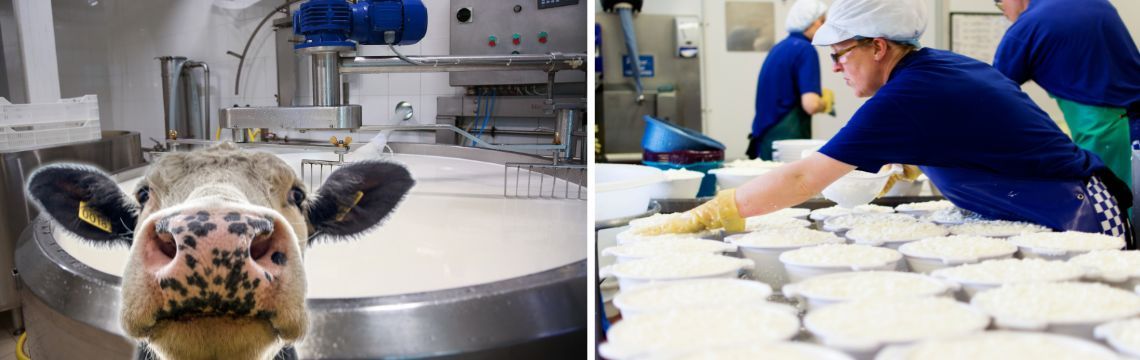
Energy and resource constraints often propel industries to find innovative ways to unlock efficiency gains and reduce operational costs. The dairy production industry is no exception – read on to discover how heat pumps are helping food companies re-think their thermal management approach.
The Scale and Energy Cost of European Dairy
The European Union is a global powerhouse in dairy production. According to recent Eurostat data, the EU produced an impressive 161.8 million tonnes of raw milk in 2024. Transforming this raw milk into the safe, high-quality consumable products we rely on, such as drinking milk, yogurts, and cheeses, requires a highly energy-intensive supply chain.
A staggering amount of energy used for dairy production is dedicated to thermal processes. In typical dairy processing facilities, around 70% of the total energy input is consumed as heat, historically supplied by fuel combustion.
With the EU pushing toward climate neutrality by 2050, the dairy industry faces a critical challenge: how to decouple its essential thermal processes from fossil fuels to radically reduce carbon emissions, without compromising product safety or inflating operating costs.
Back to basics: Heating and Cooling in Milk Production
The journey from raw milk to shelf-ready dairy requires precise, strictly regulated temperature control. Both industrial heating and cooling are foundational to product safety and shelf life:
• Initial Cooling: Immediately after collection on the farm, raw milk must be rapidly cooled to below 4°C to prevent bacterial growth.
• Pasteurization: At the processing plant, the most common thermal treatment is high-temperature short-time (HTST) pasteurization. This requires heating the milk to approximately 72°C to 75°C for 15 seconds, followed by immediate, rapid cooling back down to below 7°C.
• Advanced Thermal Treatments: For extended shelf life or Ultra High Temperature (UHT) milk, the product is exposed to brief, intense heating between 135°C and 140°C before rapid chilling.
Traditionally, these necessary temperature extremes are handled by completely separate systems. Processing plants typically rely on fossil fuel-fired boilers (usually natural gas) to generate steam or hot water for heating, and standalone electrical chillers to provide the necessary cold water for cooling
This disconnected approach is inherently inefficient; the chiller removes heat from the milk and dumps it into the atmosphere as waste, while the boiler simultaneously burns fossil fuels to create new heat.
The Heat Pump Advantage: Turning Waste into a Resource
To meet sustainability and efficiency targets, the dairy sector is shifting away from separate heating and cooling silos. The solution lies in integration, specifically by adopting an industrial heat pump to recycle thermal energy.
A heat pump is a technology that operates on a thermodynamic cycle (evaporation, compression, condensation, and expansion) using a specialized refrigerant. Rather than burning fuel to create heat from scratch, a heat pump extracts existing heat from a low-temperature source, uses a compressor to upgrade its temperature and pressure, and delivers it as highly usable thermal energy.
In a dairy production facility, the heat pump can capture the low-grade waste heat rejected by the cooling process and upgrade it to supply the heat required for pasteurization and equipment washing.
Benefits of adopting heat pump systems in dairy processing include:
• Massive Carbon Reductions: By replacing gas-fired boilers with electrified heat pumps, facilities can drastically cut direct greenhouse gas emissions. When powered by renewable electricity, the thermal process can become virtually carbon-neutral.
• Simultaneous Heating and Cooling: A heat pump provides a dual benefit. While acting as a heater for pasteurization, the "cold side" of the cycle can simultaneously generate ice water to supplement the facility's cooling demands.
• Significant Energy Savings: Reusing waste heat is far more efficient than generating new heat. According to industry case studies, integrating heat pumps to recycle heat within a pasteurization line can reduce pasteurization energy consumption by up to 77%.
• Lower Operating Costs: Though the initial capital investment is required, the exponential leap in energy efficiency insulates dairy producers from volatile fossil fuel markets, delivering significant long-term operational cost savings.
Get it done right with a trusted thermal management partner
Decarbonizing milk production is no longer just an environmental goal; it is an economic necessity. Achieving this transition smoothly requires a holistic approach to facility energy use.
As a premier thermal management solutions and services provider, Trane is uniquely positioned to help the dairy industry navigate this shift. With our deep expertise in high-performance chillers, advanced heat pumps, and integrated system controls, we partner with food and beverage manufacturers to optimize their entire thermal lifecycle. By capturing waste heat and deploying intelligent electrification strategies, Trane helps dairy producers lower operating costs, slash carbon footprint, and build a more sustainable future for the food supply chain.
Read how a French cheese manufacturer became more sustainable
Contact Us
Connect with your local Trane expert
We will help you find the needed solution