Challenge
Auckland Airport set out to replace its long-serving gas-fired HVAC plant in the international terminal, an aging system that had become energy-intensive. The airport needed a solution that would:
• Electrify heating and cooling across a 141,000m2 terminal
• Reduce emissions and significantly cut natural gas use
• Maintain comfort for more than 30,000 passengers each day
• Be installed without disrupting airport operations
• Integrate seamlessly with a multi-year terminal redevelopment
With sustainability targets including a 90% reduction in Scope 1 and 2 emissions by 2030, the airport required a modern, flexible system capable of supporting varied thermal demands in a live aviation environment.
Solution
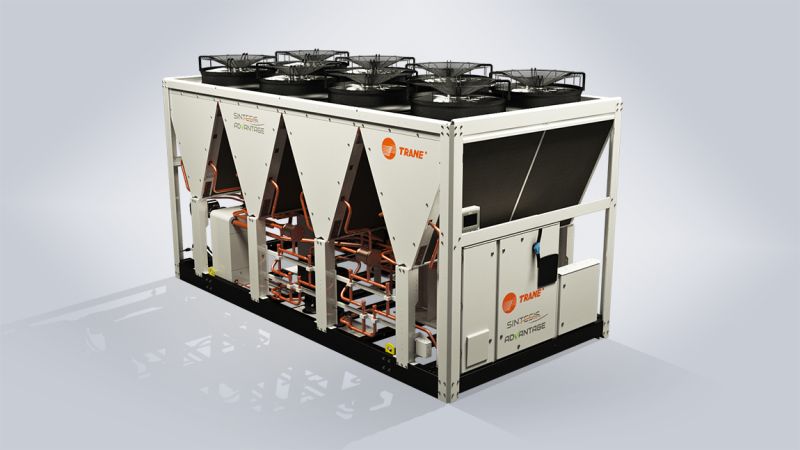
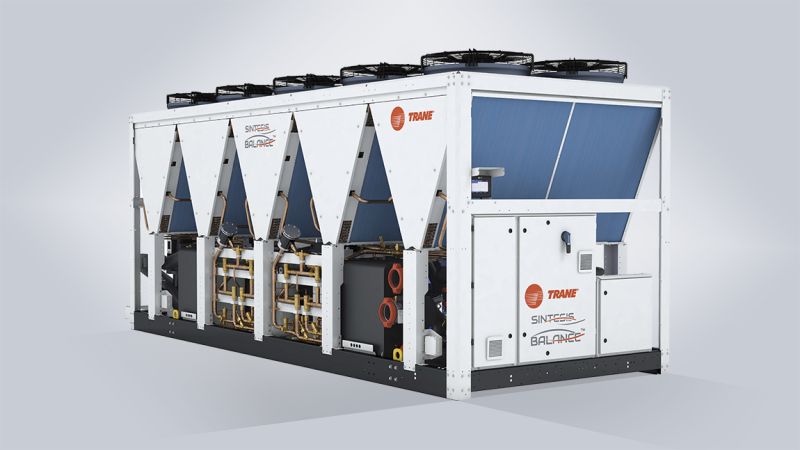
To meet these requirements, Auckland Airport selected a high-efficiency electric plant built around Trane CXAF air-to-water heat pumps and Trane CMAF multi-pipe units, each providing approximately 600 kW of capacity.
• CXAF air-to-water heat pumps deliver large-scale heating and cooling with the ability to change modes as conditions shift.
• CMAF multi-pipe units supply simultaneous heating and cooling, enabling precise temperature control across the terminal’s many zones.
This combination ensures strong performance, adaptability to Auckland's fast changing weather, and efficient heat recovery to reduce overall energy demand.
Before full installation, the technology underwent an 18-month trial in an operational part of the terminal. This confirmed:
• Reliable operation during changing outdoor conditions
• Consistent comfort through fluctuating passenger volumes
• Effective use of the buildings thermal mass for stable temperature control
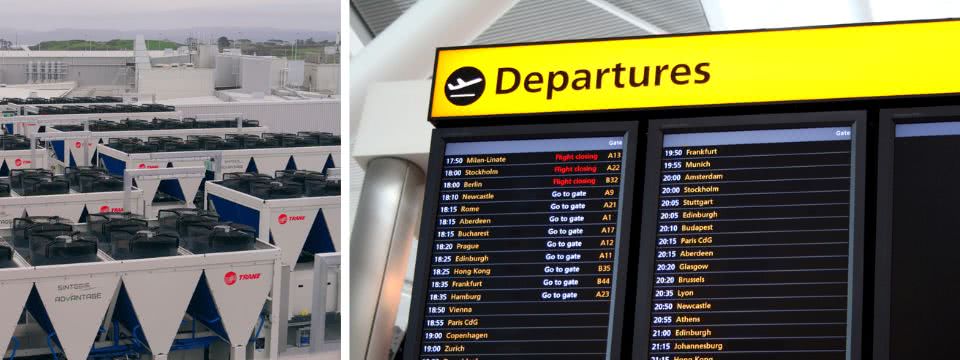
The full installation was completed in carefully sequenced stages. Each unit, comparable in size to a shipping container, was craned into place on the terminal roof while flights of passenger movements, and terminal services continued uninterrupted. The work aligned with the airports wider terminal integration project connecting the international terminal to the future domestic jet terminal.
Results
The new electric system is expected to reduce natural gas related heating and cooling demand by around 40%, marketing a major milestone in Auckland Airports decarbonisation pathway.
The Trane solution delivers:
• Simultaneous heating and cooling through the multi-pipe chiller
• Heat recovery and reuse, improving overall system efficiency
• Reduced mechanical cooling when outdoor conditions allow
• Stable, consistent comfort across all terminal areas
The upgrade supports Auckland Airports broader sustainability program, which includes expanded rooftop solar generation producing 3.5 MW of clean energy. These combined efforts contributed to the airport achieving Level 4 Airport Carbon Accreditation, placing it among global leaders in airport carbon performance.
The project represents an important step in the airport's long-term plan to modernise and electrify its infrastructure. Auckland Airport’s work with Trane demonstrates how advanced heat pump and chiller technology can improve efficiency and help lower emissions at one of Aotearoa’s busiest airports.